Welcome to Ningbo Zhongzhi Automation Technology Co., Ltd
The Ultimate Guide to Magnetic Polishing: Top 10 Questions Answered
In the precision manufacturing world, Magnetic Polishing Technology is rapidly replacing traditional deburring methods. However, many engineers and factory owners still have questions about how it works and whether it’s right for their specific materials.
Below are the most frequently asked questions about magnetic polishing, answered by our technical experts at ZZ Machine.
1. How does a magnetic polishing machine actually work?
Answer: A magnetic polishing machine uses a high-frequency electromagnetic field to drive thousands of tiny stainless steel pins (the media). These pins act as "micro-hammers" and "micro-files," swirling at high speeds through a liquid solution. They penetrate every crevice, hole, and internal thread of the workpiece to remove burrs and oxidation without changing the part's critical dimensions.
2. Can magnetic polishing reach internal threads and blind holes?
Answer: Yes. This is the primary advantage of magnetic technology. Because the pins are as small as $0.2\text{mm}$ in diameter, they flow like a liquid into areas that manual tools or traditional vibratory tumblers cannot reach. This ensures a 360-degree clean, even in complex internal geometries.
3. Which metals can be processed with magnetic polishing?
Answer: The machine is exceptionally versatile and works best with non-ferrous and non-magnetic metals, including:
Stainless Steel (304, 316, etc.)
Brass and Copper
Aluminum
Titanium
Zinc Alloys
Gold and Silver
4. Will the process damage or deform my precision parts?
Answer: No. Magnetic polishing is a "low-impact, high-energy" process. Unlike heavy ceramic media in vibratory tumblers, the lightweight stainless steel pins remove only the burrs and surface scale. It maintains a high level of dimensional accuracy ($+/- 0.01\text{mm}$), making it ideal for medical implants and aerospace components.
5. How long does a typical polishing cycle take?
Answer: One of the biggest ROI factors is speed. While traditional methods take 2–6 hours, a ZZ Magnetic Polishing Machine typically finishes a batch in 5 to 15 minutes.
6. What size of magnetic pins should I use?
Answer: The choice depends on your part's geometry:
0.2mm – 0.5mm: Best for intricate jewelry, fine threads, and tiny slots.
0.7mm – 1.2mm: Best for heavy-duty deburring, large hardware, and brightening exterior surfaces.
7. Is the polishing solution eco-friendly?
Answer: Yes. At ZZ Machine, we prioritize sustainability. Our polishing fluids are pH-neutral and biodegradable. Because the process is "wet," it also eliminates the hazardous dust found in manual grinding, keeping your factory air clean and safe.
8. How many parts can I polish at one time?
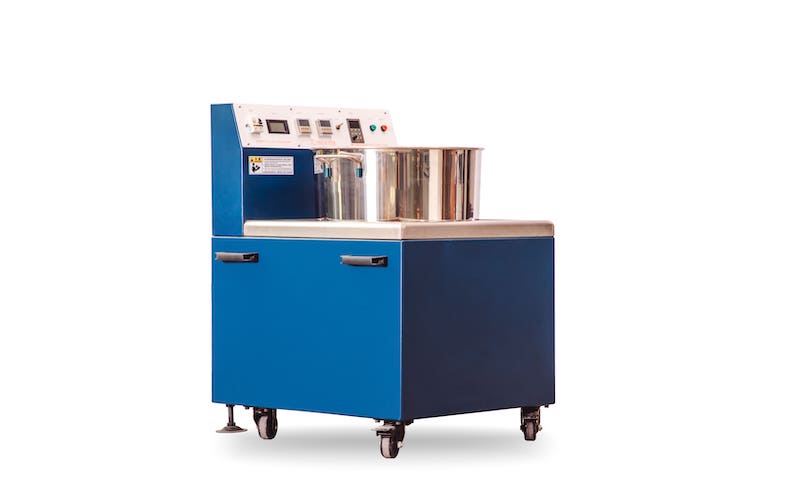
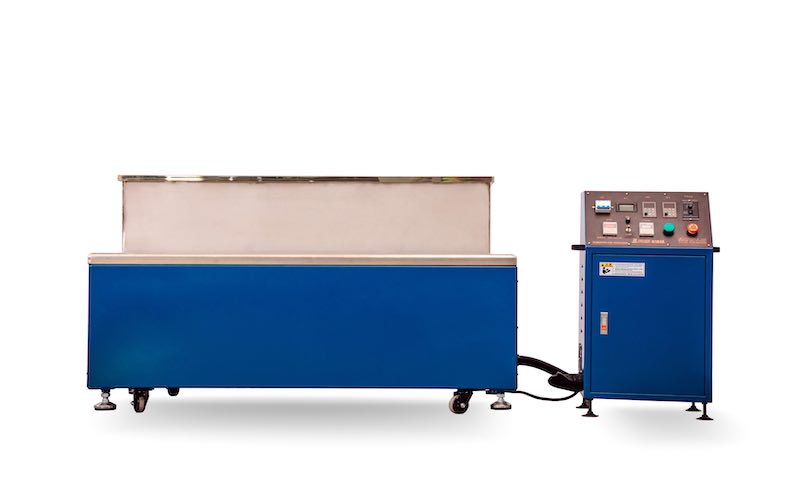
Answer: This depends on the machine's bowl capacity. Our range covers everything from small tabletop units for jewelry to industrial-scale rotary systems that can handle thousands of parts per day.
9. What are the main maintenance requirements?
Answer: Magnetic polishing machines are incredibly low-maintenance because they have very few moving mechanical parts. The stainless steel pins are semi-permanent and do not wear down like sandpaper or ceramic media. You only need to change the water and solution periodically.
10. What is the expected ROI (Return on Investment)?
Answer: Most of our clients report that the machine pays for itself within 3 to 6 months. This is achieved by reducing labor costs (replacing 5–10 manual workers) and significantly lowering the scrap rate of defective parts.